
Daunan
by the Penan community of Long Nen, Baram, Sarawak
Woven with inspiration drawn from the lush jungle foliage that surrounds and sustains the Penan community, this artwork brings to life a recurring design deeply rooted in their visual language. More than a decorative motif, the pattern embodies a vital cultural symbol—one that echoes through generations as a reminder of identity, belonging, and the wisdom passed down from ancestors to their descendants.
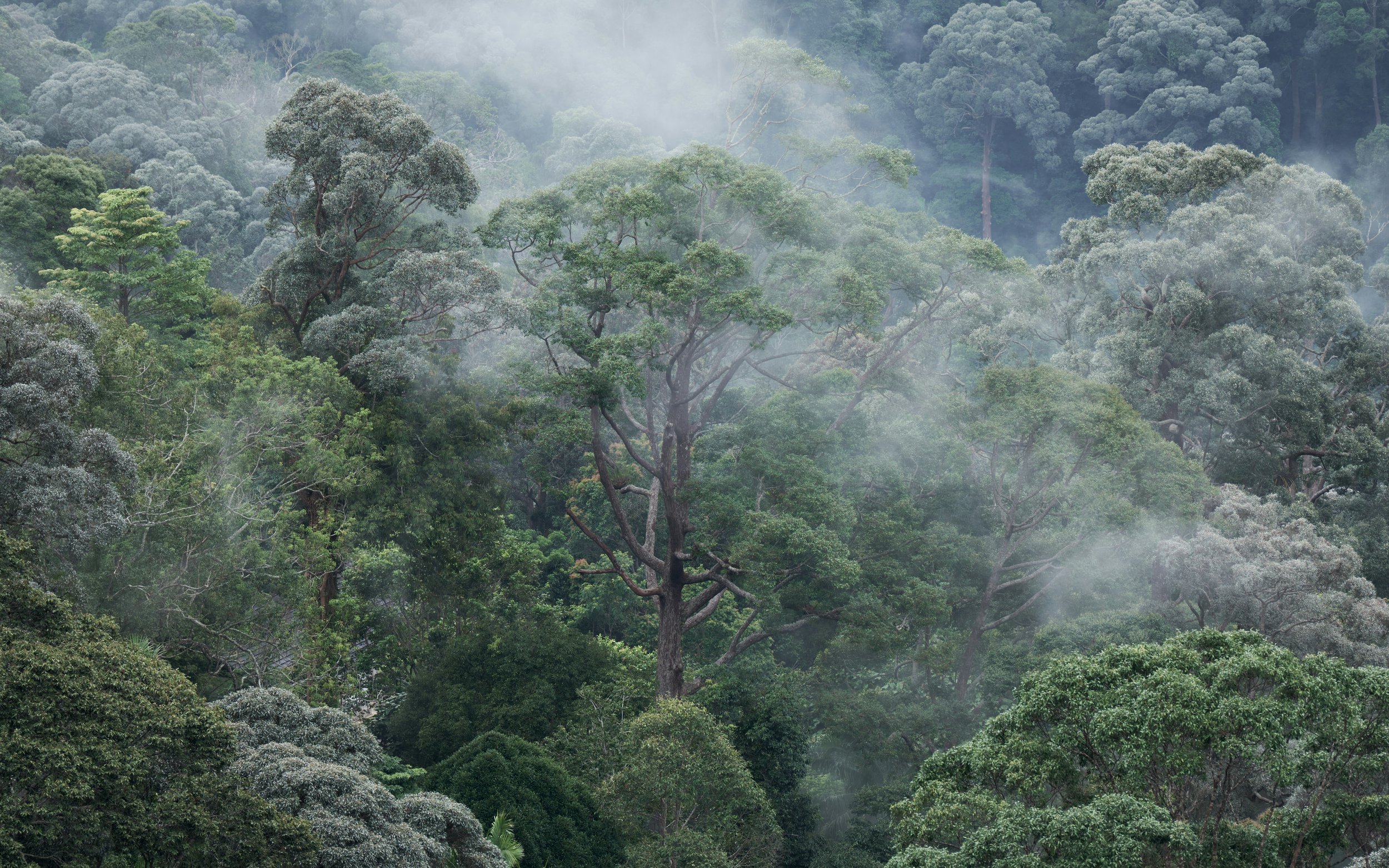
For the Penan, who have long been known as master navigators of the rainforest, every leaf, vine, and branch holds meaning. Their designs often mirror this intimate relationship with nature, drawing from the forms, rhythms, and repetitions found in the forest canopy. This particular motif, inspired by the geometry and flow of jungle leaves, becomes a quiet homage to the verdant world that has shaped Penan knowledge systems, survival skills, and spiritual beliefs.
The artwork’s interplay of contrasting colors—each hue chosen with care—creates a balanced visual tension that evokes the rainforest’s own equilibrium: shadow against sunlight, growth against decay, silence against movement. These contrasts not only heighten the aesthetic impact of the piece but also reflect the delicate balance the Penan maintain with their environment.
In this tapestry, artistry and heritage are inseparable. The recurring pattern stands as a powerful symbol of continuity, honoring the unbroken thread that binds past, present, and future within the Penan community. Through its refined craftsmanship and cultural depth, the artwork becomes more than an object of beauty—it becomes a living narrative, one that preserves tradition while inviting new generations to remember, cherish, and carry forward the stories woven into every line.
About the Community
The Penan community is one of Sarawak’s most distinctive Indigenous groups, renowned for their deep, symbiotic relationship with the rainforest. Traditionally semi-nomadic, the Penan have long been celebrated as master trackers, gatherers, and forest guardians, possessing unparalleled knowledge of jungle plants, wildlife behaviour, and natural navigation. Their lives revolve around the rhythms of the rainforest, which they regard not simply as a resource, but as a living home, teacher, and ancestral heritage.
Historically, the Penan relied on a nomadic lifestyle—moving through the forest in small family groups, hunting with blowpipes, and gathering wild sago, fruits, and medicinal plants. While many Penan communities have since settled in longhouse villages due to development pressures and government resettlement efforts, their cultural identity remains deeply rooted in the forest. Even today, countless Penan continue to depend on traditional ecological knowledge for food, crafts, and daily living.
One of the community’s most admired skills is their intricate weaving tradition. Penan women create beautifully patterned baskets, mats, and bags (notably the iconic Selabit and the modern rattan Penan bag), using forest materials such as rattan and pandanus. Each pattern carries meaning—often inspired by plants, rivers, or ancestral stories—reflecting a cultural worldview where art, nature, and memory are intertwined.
The Penan are also widely recognised for their role in environmental activism. For decades, they have been at the forefront of efforts to protect Sarawak’s rainforests, advocating for land rights, sustainable development, and the preservation of their cultural and ecological heritage. Their peaceful blockades in the 1980s and 1990s became symbolic of Indigenous resistance against deforestation and continue to inspire global conservation movements.
Today, the Penan community stands at a crossroads—embracing education, new livelihoods, and cultural revitalisation while striving to protect the rainforest that has shaped their identity for generations. Their story is one of resilience, stewardship, and an enduring commitment to the land that sustains them.
About the Artists
The artists of Long Nen represent the creative heart of the Penan community, renowned for their deep connection to the rainforest and the wisdom passed down through generations. Among them is Jonita Ayat, a skilled basket weaver and respected leader who guides a community of women through every stage of the craft—from harvesting rattan by hand to dyeing, weaving, and shaping each piece with care and meaning. Her dedication reflects not only artistry, but also a profound sense of responsibility to her people and their traditions.
Across the village, women artisans transform natural materials such as rattan and pandan leaves into intricate baskets, mats, and bags, weaving patterns inspired by the forest’s textures, movements, and stories. Men support this process by sourcing and preparing the raw materials, embodying the community’s collaborative spirit and harmonious approach to craftsmanship.
Together, these artists preserve cultural heritage, champion forest stewardship, and offer a vibrant expression of Penan creativity—bridging ancestral knowledge with contemporary appreciation while ensuring their traditions continue to thrive.