
Batu Lawi Grandeur
by Meges Laoi
This painting reflects my deep impression of one of nature’s most awe-striking landmarks. Batu Lawi feels like it rises out of the earth with an almost mythical presence—appearing suddenly among other mountain forms, yet standing apart in a uniqueness that is entirely its own.
The clouds don’t just pass it; they dance around it, moving in mysterious gaits that shift the entire mood of the sky. When sunlight breaks through, its rays join this dance, weaving harmony between shadow and brilliance. Together, they create a moment that feels sacred—something words can barely contain, but colours and strokes can attempt to honour.
About the Community
The Bidayuh are one of Sarawak’s major Indigenous communities, mainly found in the Kuching, Bau, Serian, and Padawan areas. Known for their close-knit village life, they traditionally gathered in baruk—round communal houses used for ceremonies and important discussions.
They have several distinct dialects, including Biatah, Bukar-Sadong, and Jagoi-Singai, each reflecting the diversity within the community. The Bidayuh are known for their warmth, hospitality, bamboo craftsmanship, gong music, and deep connection to the land.
Today, they continue to preserve their cultural identity while thriving in modern life, contributing to the rich multicultural fabric of Sarawak.
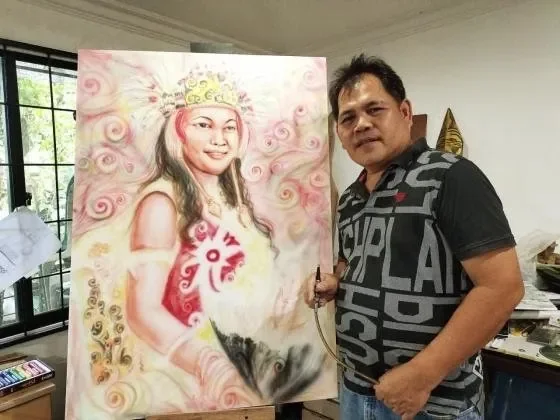
About the Artist
Meges Laoi is a Bidayuh multidisciplinary artist whose practice spans painting, sculpture, mixed media, and contemporary cultural expression. With 36 years of experience teaching the arts, he has guided generations of young creatives while continuously refining his own artistic voice.
In 2021, Meges was selected as a MYYLA Artist-in-Residence, a recognition that highlighted both his technical mastery and his deep commitment to nurturing Sarawak’s creative ecosystem. His work often carries the quiet strength and cultural sensibilities of his Bidayuh heritage, drawing inspiration from the land, stories, and rhythms of his community.
Today, Meges continues to explore new artistic forms while serving as an important cultural voice—bridging tradition and modernity, and celebrating the richness of Indigenous identity through his craft.